


 Appointment
 +374 44 47-11-11
 Periodontitis is an inflammation that occurs in the bone tissue around the root of the tooth. If periodontitis occurs without pain, the bone around the root will resorb and a granuloma (a sac on top of the tooth root) or tooth cyst will appear.
Types of periodontitis
● Infectious periodontitis - occurs due to untimely or improper treatment of tooth decay.
● Traumatic periodontitis - occurs after mechanical trauma.
● Drug-induced periodontitis - develops after improper root canal treatment.
Stages of periodontitis
● Acute periodontitis - develops rapidly, accompanied by pain. It can be serous and purulent.
● Chronic periodontitis - symptoms are less severe unless the chronic form is exacerbated. Chronic periodontitis can occur in fibrous, granulating or granulomatous form.
Under the influence of analgesics or antibiotics may be observed reduction or disappearance of pain syndrome after the acute stage of periodontitis, however, this does not indicate improvement of the condition, but, on the contrary, may indicate the transition of periodontitis to a more complex form.
Treatment methods for periodontitis
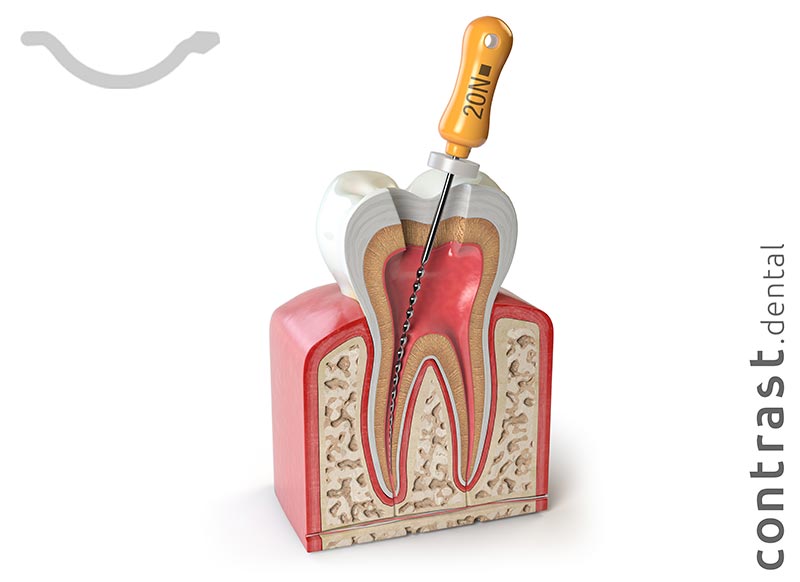 ● Conservative treatment of periodontitis - includes mechanical and drug treatment of root canals. Within 1-2 weeks, additional treatment with medications is carried out. Upon completion of therapy, root canals are hermetically sealed.
● Surgical treatment of periodontitis - is used in more severe forms, includes removal of the infected area along with the root tip of the tooth or complete extraction of the tooth.


